
Is the U.S. losing the data center race to China?
15 hours ago
2 min read
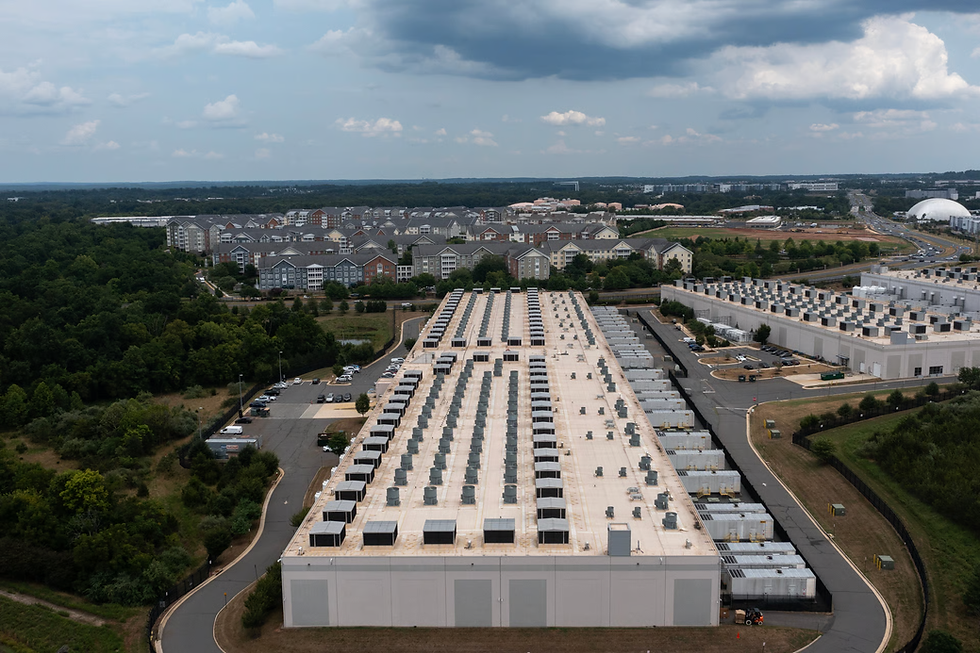
China is rapidly expanding its artificial intelligence infrastructure, using large-scale data center construction and abundant renewable energy to strengthen its position in the global AI race against the United States.
At the centre of this expansion is Ulanqab, a city in Inner Mongolia near the Gobi Desert, where nearly 90 data centers are planned. Major Chinese technology companies, including Huawei, Kuaishou and VNET, are establishing operations in the region.

The development reflects Beijing's strategy to make AI a major driver of economic growth. China recently announced a $560 billion investment plan to expand information infrastructure over the next five years, while investment by publicly listed Chinese companies is expected to reach approximately $139 billion this year.
Despite these ambitions, China continues to face significant challenges. The United States maintains a substantial lead in AI computing infrastructure and advanced semiconductor technology. American export restrictions have also limited Chinese companies' access to high-performance AI chips.
However, China is leveraging another competitive advantage: affordable electricity and extensive renewable energy capacity.
Under its “Eastern Data, Western Compute” initiative, Beijing is developing computing hubs in regions with abundant wind and solar resources, allowing energy-intensive data centers to operate closer to major power sources.
In Ulanqab, nearly half of the electricity grid is powered by wind and solar energy. Technology company Envision is developing a large-scale data center campus that aims to obtain more than 80% of its electricity directly from company-operated wind farms.


Comments