
Beyond Outsourcing: Sri Lanka's Next Technology Chapter
Updated: Aug 4
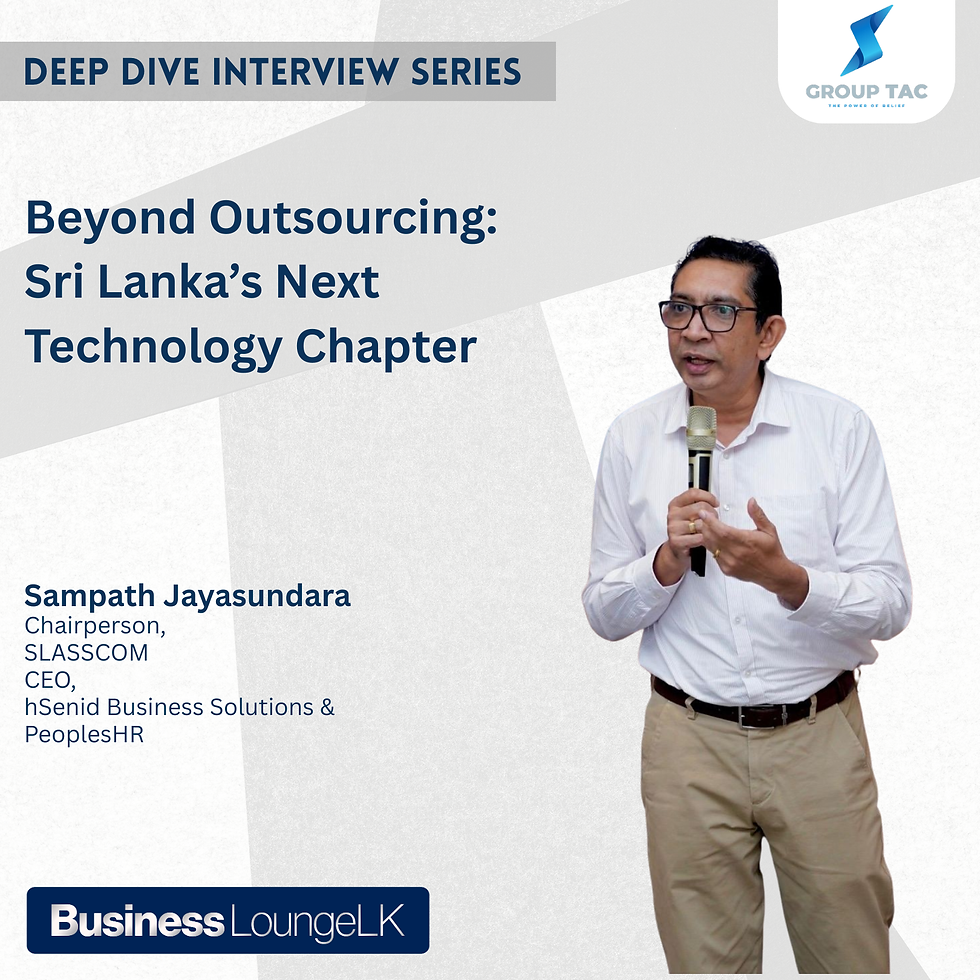
Q1. You've had a long career in this industry. How did it all begin for you?
I graduated from the University of Colombo and joined the IT industry in 1999. Back then, the industry itself was new in Sri Lanka, so we had to do everything ― development, implementation, even going to customer sites to gather requirements. There was no fixed structure in companies at that time, so people who contributed could climb the ladder fast. Within a few years, I had already played several roles ― technical work, then operations management, even involved in business development work in Africa, India, Bangladesh & Southeast Asia. From there I moved into leadership, and eventually became CEO. We built the business in Sri Lanka and then expanded it into Southeast Asia, South Asia and Africa. Today we operate across many countries with thousands of customers. It's been a journey of almost three decades, and I'm still enjoying it.
Q2. What made you want to take on the Chairman role at SLASSCOM, and what's your main goal?
I got involved with SLASSCOM early on, through Dinesh Saparamadu, who was a former Chairman. I've always believed that if you don't enjoy something, it's hard to keep doing it ― and I genuinely enjoy this kind of community work. Over time I moved from council member to the board, and eventually to Chairman. Our shared goal as an industry ― and this has support right upto the presidency ― is to grow Sri Lanka's IT and BPM industry to a US $5 billion export sector. Right now we're at around $2 billion, so there's real work to do, and it needs strong strategy, not just a slogan.

Q3. AI and automation are changing every industry. How should the Sri Lankan IT professional look at this?
I'd call it a golden opportunity. The volume game is over ― now it's about high-end, high-value work, and our graduates are genuinely talented, they just need the right polishing. We've actually built industry role "personas" with the skills needed for different job roles, and we're sharing these with universities so students know exactly what to learn. Everyone globally is chasing digital transformation and AI-driven processes right now, so if we can convert our young workforce quickly, we have a real window to win in the global market.
Q4. You've spent years in HR technology as well. How do you see that space evolving?
What I've learned is that every company already has a goldmine sitting in its systems of record ― HR data built up over 15-20 years. The real value now is in using AI to extract intelligence from that data. Instead of digging through reports, you should be able to simply ask, "Give me my top five people in this department based on these three competencies," and get an instant answer. It's the same at industry level ― we've built up so much knowledge over the years, the real skill now is in using it properly to plan and solve problems.

Q5. Brain drain is a big worry ― skilled people keep leaving. How do we keep them here?
People migrate for better prospects, plain and simple ― not because they don't love this country. If we can offer them similar value here, most would rather stay. That means creating genuinely high-value jobs instead of low-margin outsourcing work, and also looking at things like tax structures, since IT is a high-salary, high-tax industry. If we reduce that burden while increasing what people earn here, retention gets a lot easier.
Q6. What about our university education system ― is it keeping up?
Honestly, not fast enough. UGC and Universities know that they need to revise their curriculums, and we're part of those discussions, but getting approval for syllabus changes takes far too long ― sometimes two years. By the time a new syllabus is approved, it's already outdated, because technology moves so much faster than that. Compare our degree syllabuses to a UK university's, and you'll see a real gap, especially in areas like data analytics. This needs to be fast-tracked, and everyone involved knows it.
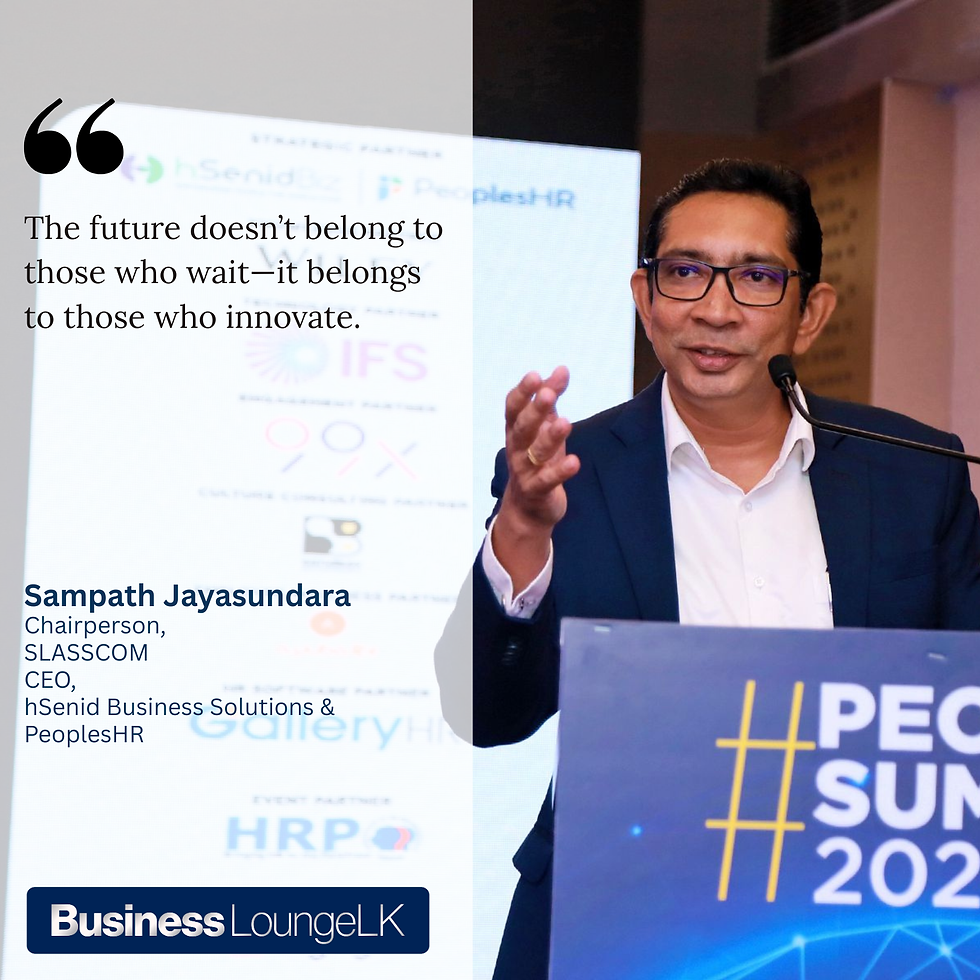
Q7. Finally, what's your five-year vision for Sri Lanka's tech industry?
Building high-value full life-cycle engineers or forward deployment engineers, attracting global capability centers, supporting Sri Lankan product and service companies in reaching global markets, pushing the government for the policy changes the industry needs, transforming the existing talent pool and university graduates into a high-value talent pool, and supporting startups and scale-ups to grow faster — these would be some priority areas to work on. IT is one of the few industries where our outflow of foreign currency is extremely low compared to what we bring in, so we can make a real, direct impact on the economy. It won't happen in a year, but if we commit to the plan and stay consistent for a few years, I believe we can get there. Sri Lanka has done it before in other fields — it's time to repeat that in technology.


Comments