
Fujairah and Khor Fakkan :The two ports keeping Gulf in business
- Tharindu Ameresekere
- 1 day ago
- 2 min read
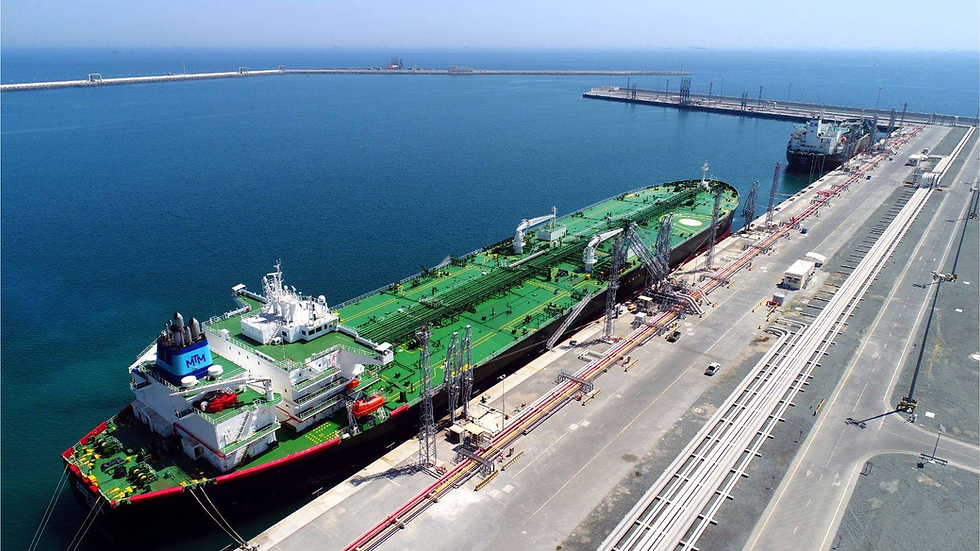
Picture Credit: The Maritime Standard
The eastern UAE ports of Fujairah and Khor Fakkan have rapidly transformed into critical trade and energy hubs as the ongoing Gulf conflict disrupts shipping through the Strait of Hormuz. With major western Gulf ports effectively cut off, the two Indian Ocean facing ports are now handling the majority of the UAE’s seaborne trade and oil exports.
At Fujairah, crude oil continues flowing through pipelines onto waiting tankers while grain shipments, containers, and cargo trucks move around the clock. Since the outbreak of the Iran conflict, crude exports through the port have surged by 38 percent, nearing the maximum capacity of the Abu Dhabi Crude Oil Pipeline that bypasses Hormuz. Analysts say the port has become essential for maintaining the UAE’s role in global energy markets.
Meanwhile, Khor Fakkan has experienced an even more dramatic transformation. Terminal operator Gulftainer reported that weekly container traffic has exploded from around 2,000 containers before the war to nearly 50,000. Truck movements have similarly skyrocketed, jumping from roughly 100 daily trucks to nearly 7,000 as the port becomes a gateway for imports ranging from groceries to medical supplies.

Despite the economic boom, the ports remain vulnerable. Earlier this week, drones linked to Iran struck the Fujairah Oil Industry Zone, causing fires and injuring workers. Iran’s Revolutionary Guards also published a map appearing to extend their operational reach along the UAE’s eastern coastline, signaling that these strategic ports could become direct targets if tensions escalate further.
UAE officials have emphasized that maintaining freedom of navigation remains a national priority. Energy Minister Suhail Al Mazrouei stated that no country has the right to threaten international trade routes. However, the attacks have exposed how fragile the region’s new trade architecture has become, even as alternative routes temporarily keep supplies moving.
The crisis has also highlighted the importance of geography in Gulf trade. Unlike countries such as Qatar, Kuwait, and Bahrain, whose maritime access depends heavily on Hormuz, the UAE can still access the Indian Ocean directly through its eastern coastline. As uncertainty continues, the UAE is already investing in long term infrastructure projects to strengthen these ports, signaling that Fujairah and Khor Fakkan may remain strategically important long after the conflict ends.


Comments