
Leading with Experience, Growing with Innovation
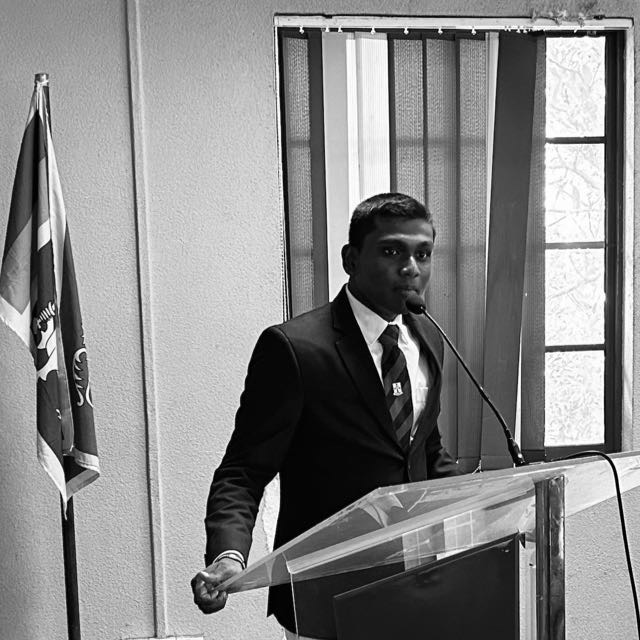

Q1: You have had quite a remarkable journey ― from hospitality to sales, from executive to entrepreneur. Could you walk us through how it all began?
My journey started about 28 years ago, when I entered the workforce at Pizza Hut. That experience gave me clarity rather quickly ― I realised the hospitality industry wasn't where I wanted to build my career. So I moved into sales, and from there, I steadily climbed the ladder, investing in my education across sales, marketing, and management.
Over the years, I rose from being a sales executive all the way to the position of Managing Director. At that point, I felt a deeper calling ― the drive to build something of my own. About 16 years ago, I founded Sirocco Air Technologies, followed by Mosta Engineering and OkMart. It was around eight years into that entrepreneurial chapter that I came across COYLE. A friend who was already a member introduced me to the chamber, and I immediately recognised its value. Here was a platform filled with serious business entrepreneurs ― people who thought, breathed, and lived business. That's what drew me in, and I haven't looked back since.
Q2: As the newly appointed Chairman of COYLE, what is your overarching vision for the year ahead?
My central vision this year is to bridge the gaps within COYLE ― and by doing so, to build a stronger, more unified chamber.
COYLE today has three distinct groups: senior members who carry decades of wisdom, younger members who bring fresh thinking and energy, and female members who joined the chamber after 25 years and bring their own perspective and experience. Each group has much to offer, but there is a disconnect between them ― a gap between old thinking and new thinking, between established instincts and modern approaches.
My goal is to bring these three voices together. When you combine the battle-tested experience of senior entrepreneurs with the innovation of younger members and the unique touch of our female entrepreneurs, you create something far more powerful than any one group alone.
COYLE is now 27 years old. By bridging these generational and gender divides, I want to strengthen the chamber to stand for another 25 to 50 years. Beyond internal unity, we are also looking at foreign collaborations, facilitating business-to-business engagement, contributing to the national economy, and raising the overall standard of entrepreneurship in Sri Lanka. At the end of the day, a country can only scale itself if it has a strong, capable set of entrepreneurs driving it forward.

Q3: Sri Lanka has no shortage of entrepreneurial talent, yet many promising ventures struggle to scale beyond a certain point. What, in your view, are the root causes of this, and how can they be addressed?
This is one of the most critical conversations we need to have. The first challenge is mindset ― we are a small nation, and sometimes, we think small as well. Entrepreneurs need to break through that ceiling. They need to travel, expose themselves to new industries, new markets, and new ways of thinking. Self-development and continuous learning are non-negotiable.
But mindset alone isn't enough. The structural barriers are equally real. Sri Lanka does not have a dedicated development bank. When an entrepreneur wants to scale ― to invest in new machinery, expand factory space, hire skilled people, or begin exporting ― the funding available to them is directly tied to the collateral they can offer. If you don't have the collateral, you can't access the capital. And without capital, growth stalls.
What the country needs is a policy ecosystem that actively supports entrepreneurs. Government bodies like the EDB are doing commendable work helping Sri Lankan businesses enter international markets through exhibitions and B2B forums. But we need to go further ― with development banks that offer grace periods, targeted funding, and structured support. Look at how Thailand operates: their chambers, their embassy in Sri Lanka, and their government collectively facilitated a B2B meeting here just this week, bringing Thai business owners into dialogues across agriculture, manufacturing, pharmaceuticals, and more. That kind of institutional support is what Sri Lankan entrepreneurs deserve.
Q4: You spoke of bridging generational gaps as your key vision. How specifically can senior entrepreneurs mentor and add value to the younger generation?
Senior entrepreneurs have been through the mill ― quite literally. Many of the founding and second-generation members built their businesses without mobile phones, without laptops, without the ease of international travel for trade fairs and business delegations. Every lesson they learned came the hard way, through the long route. And when you take the long route, you accumulate something invaluable: deep, lived experience.
Today, a young entrepreneur can use ChatGPT to draft a compelling letter in minutes, or use AI to analyse a profit and loss statement in seconds. These are remarkable tools. But there is a difference between using a tool and understanding the underlying principles that the tool is built upon. Senior members carry those principles in their bones.
Think of it this way ― if the foundation is solid, the structure built upon it can reach great heights. Senior entrepreneurs are that foundation. The younger generation can take the experience and hard-won wisdom of their elders, combine it with the power of modern technology and contemporary thinking, and build something truly extraordinary. That is the partnership I want to cultivate within COYLE.

Q5: In a world where AI and digital tools are reshaping industries overnight, what skills do you believe are truly essential for the next generation of entrepreneurs?
Artificial intelligence is already here, and it is here to stay. It will make business faster, more efficient, and more accessible. I embrace that fully.
But here is what I also believe: technology cannot replace substance. Young entrepreneurs today can obtain an MBA in record time, access certifications with ease, and build impressive resumes quickly. That is wonderful. But if there is no depth behind those credentials ― no real exposure, no tested judgment, no hard-earned experience ― they will struggle when navigating the inevitable difficulties of business.
A company built to last 30 or 40 years, one that can be passed on to the next generation, requires a person of substance at its helm. The skill I would most want to see in young entrepreneurs is not a specific technical competency ― it is the commitment to developing themselves with depth and discipline. Seek real exposure. Accept challenges. Put yourself in rooms where you are not the smartest person. Build a foundation strong enough to weather the storms that every business will face.
Q6: Accessing markets, building networks, and attracting investors remain persistent challenges for Sri Lankan entrepreneurs. What is COYLE doing to address these specific pain points?
We have built several concrete initiatives to tackle exactly these challenges. One of our flagship programmes is the IAM (I Am) initiative, where we select three entrepreneurs who have achieved significant success in business, and we groom them to present themselves and their ventures to international standards.
We also host Diplomats' Night, an event where we invite members of the diplomatic corps for one-on-one interactions with our entrepreneurs. If a member wants to open doors in a particular overseas market ― to explore export opportunities, regulatory pathways, or partnerships ― these relationships with ambassadors and high commissioners can be transformative.
Beyond that, we organise trade delegations that connect our members to international markets and facilitate B2B forums. Some of our most impactful stories have come from these moments ― I recall a delegation where members met international counterparts and, as a direct result of that network connection, were able to establish their business in the United States.
At its core, COYLE provides a layered ecosystem: mentorship, leadership development, access to diplomats and potential buyers, and consistent opportunities for collaboration. Put all of that together, and you have a powerful engine for business growth.

Q7: What legacy do you hope to leave at COYLE, and what is your message to aspiring young entrepreneurs who are just beginning their journey?
COYLE is, at its heart, a brotherhood and a sisterhood. When a family is small, it is naturally close and united. As it grows, the connections can weaken ― people become distant, conversations become transactional. COYLE today has around 140 members whose companies collectively turn over approximately 800 billion rupees. That is an extraordinary concentration of experience, knowledge, and opportunity within one chamber. My legacy would be to ensure that every single member ― regardless of age, gender, or generation ― feels that COYLE has had a positive, tangible impact on their life and their business. That the chamber is vibrant, connected, and a genuine connector of people and possibilities.
And to the young, aspiring entrepreneur who is just starting out: my message is simple. Keep your glass half empty. Always leave room to be filled. The moment you believe you know everything, you stop growing. The world is far bigger, far more complex, and far more full of opportunity than any one person can fully grasp. Surround yourself with people smarter than you. Stay open to new ideas, new thinking, new industries, and new collaborations. And never, ever give up ― because every entrepreneur who has built something meaningful did so by staying in the game long after it stopped being comfortable.


Comments